Story Ledger

Every Beat has a story.

Each one grows out of a story people actually tell. The folklore section is what the tradition says, with sources. The 042beats interpretation is ours: a game creature inspired by that story, not a claim about the tradition. Entries marked needs review are waiting for native-speaker or scholar review before launch.

Mbeku, as modelled in the game#001uncommon

Mbeku

EarthTricksterIgboFolktale character

“It talks its way into every feast and out of every consequence — almost.”

Folklore — Mbe (Igbo) · South-East Nigeria

In Igbo folktales the tortoise is the archetypal trickster: clever, greedy and talkative. In the widely told tale of the tortoise and the birds (retold in Chinua Achebe's Things Fall Apart), Tortoise borrows feathers to attend a feast in the sky, renames himself 'All of you' so that everything offered 'to all of you' becomes his, and is abandoned by the angry birds. He falls, his shell shatters, and a medicine man pieces it back together — which is why the tortoise's shell is not smooth. Trickster tales are used to teach children moral lessons.

042beats interpretation

Mbeku gather where the tortoise's tales are still told — courtyards, market benches, moonlight story circles — as if they like to hear about themselves. Young Mbeku have glossy, unbroken shells and a bottomless appetite for other Beats' good fortune.


Sources (3)
Patchshell Mbeku, as modelled in the game#002rare

Patchshell Mbeku

EarthTricksterIgboFolktale character

“Every crack in its shell is a lesson. It has learned most of them.”

Folklore — Mbe (Igbo) · South-East Nigeria

The tortoise after his fall from the sky feast: his shattered shell was gathered and stuck back together by a medicine man, leaving the cracked, patterned shell tortoises have today.

042beats interpretation

Mbeku that have fallen hard and been nursed back by an herbalist set in a patchwork of mismatched plates. They are humbler, tougher and — the herbalists say — only slightly less greedy.

Sources (1)
Zomo, as modelled in the game#004uncommon

Zomo

BeastTricksterHausaFolktale character

“It is never where you looked. It was there a moment ago — laughing.”

Folklore — Zomo (Hausa) · Northern Nigeria

Zomo, the hare, is one of the trickster characters of Hausa folktales alongside Gizo the spider and Dila the jackal. Collections of Hausa tales were published in the early twentieth century by A. J. N. Tremearne among others, and a Zomo tale was adapted for children in Gerald McDermott's picture book 'Zomo the Rabbit'.

042beats interpretation

Zomo Beats are all ears and nerve: blur-fast, impossible to corner, and convinced that the clever answer is always the fast one. They thrive in Enugu's verges and parks and race kekes for fun.

Sources (2)
Ogolo, as modelled in the game#006uncommon

Ogolo

RhythmSpiritKalabari (Ijaw)Folkloreneeds review

“It said your name before you told it. It won't say who taught it.”

Folklore — oru ogolo (Kalabari) · Niger Delta, Rivers State

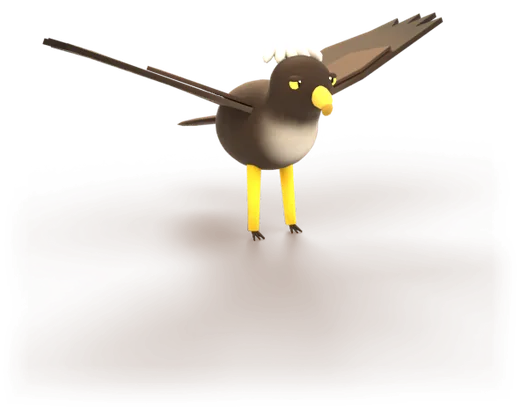
Among the Kalabari Ijaw, oru ogolo is described as the talkative bulbul bird that lives in villages and speaks the language of the spirits. Birds appear, less commonly than aquatic animals, in the headdresses of Kalabari water-spirit (owu) masquerades.

Handling note: Owu masquerades are sacred to Kalabari communities. 042beats depicts only the bird — never masquerades or their rites. Single secondary source: needs Kalabari cultural review before launch.

042beats interpretation

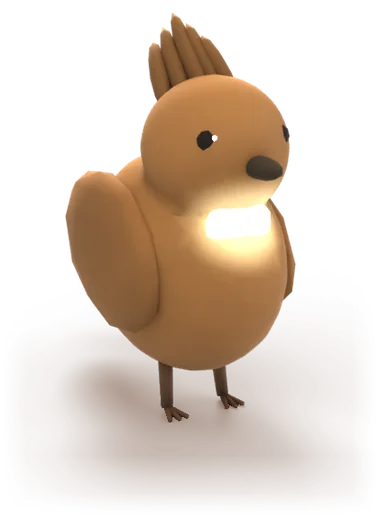
Ogolo Beats are small crested songbirds that repeat everything they hear — bus-conductor calls, market haggling, half a gospel chorus — and somewhere in all that noise, a word or two that nobody alive taught them.

Sources (1)
Gizo, as modelled in the game#008common

Gizo

VenomTricksterHausaFolktale character

“Before any tale is told, someone says its name. It is always listening.”

Folklore — Gizo (Hausa) · Northern Nigeria

Gizo the spider is the most prominent trickster hero of Hausa folktales; according to A. J. N. Tremearne, storytellers invoked his name before telling a tale. Gizo is cunning and almost always outwits the other characters — in one tale he wins figs from a flock of crows, in another he fools crocodiles long enough to eat most of their eggs.

042beats interpretation

Gizo Beats spin webs across market rafters and unfinished buildings. Each web hums faintly with a half-told story — tug the right thread and you'll hear how it ends.

Sources (1)
Oilhound, as modelled in the game#010common

Oilhound

BeastIgboFolktale characterneeds review

“It was on its way somewhere important. Then it smelled the oil.”

Folklore — Nkịta (Igbo) · South-East Nigeria

In an Igbo myth of the origin of death, the people sent the swift dog to Chukwu with the plea that the dead should return to life, while a slower messenger carried the opposite message. On the way the dog stopped to help itself to fresh palm oil a woman was pressing, and arrived too late — so death became permanent. Versions differ on the slower messenger (chameleon or toad).

Handling note: Chukwu is the Supreme Being in Igbo religion; 042beats references the tale but never depicts Chukwu. 'Nkịta' simply means 'dog'; the Beat's game name is the English 'Oilhound'.

042beats interpretation

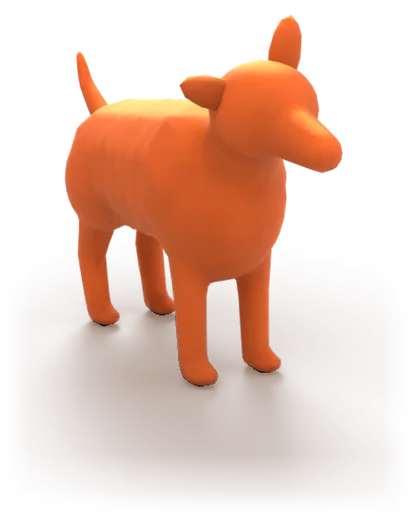
Oilhound are rangy roadside Beats with oil-glossed coats. Loyal, fast and hopelessly distractible, they will abandon any errand for a palm-oil seller — and somewhere deep down they know what that once cost the world.

Sources (2)
Torchhound, as modelled in the game#011rare

Torchhound

FlameBeast042beats original (Igbo folktale)042beats originalneeds review

“It smelled the oil once. It has not turned its head since.”

042beats interpretation

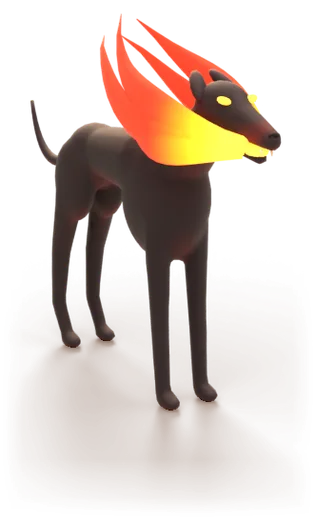
An Oilhound that has learnt what its distraction once cost the world. It has lost its taste for palm oil, carries a steady flame in its jaws and never lets its attention wander: Torchhounds promise to guard villages, towns and their people. Still as loyal as ever, but focused now, and quick to take a command.

Sources (2)
Iwin, as modelled in the game#012rare

Iwin

ForestSpiritYorubaFolkloreneeds review

“The bank looks empty. Look again.”

Folklore — Iwin (Yoruba) · South-West Nigeria

In Yoruba belief, iwin are spirits of the land — of thick groves, caves and the wet hollows between roots — somewhere between fairy, trickster and guardian of a place. They weave illusions, confuse travellers who blunder into their territory, and are associated with the herbal knowledge of the forest. The word iwin is glossed as 'fairy' or 'spirit'.

Handling note: Some Yoruba traditions link forest spirits to Osanyin's herbal lore. 042beats presents Iwin as wild nature spirits, never as deities or in ritual contexts, and frames their capture-for-sale as a crime in the story.

042beats interpretation

A few Iwin followed the stories of Yoruba traders and students to Enugu and settled along its quiet streams. Their illusions make a stream bank look empty even when it is full — which is exactly why trappers want them, and why their sudden silence is the first sign that something is wrong in the city.

Sources (2)
Egbere, as modelled in the game#013rare

Egbere

NightTricksterYorubaFolklore

“It cries the whole night through. Ask yourself who it is crying for.”

Folklore — Egbere (Yoruba) · South-West Nigeria

In Yoruba folklore, egbere are small, malevolent humanoid beings of the woods, active only at night. They are associated with a small mat and are said to cry constantly — though the sincerity of the tears is doubtful. Anyone who manages to take an egbere's mat is said to gain great wealth.

042beats interpretation

Egbere Beats sob in the dark under flame trees and in empty lots, clutching small woven mats. They are harmless unless cornered. Players can take an Egbere's mat for a quick fortune — and the city will remember what kind of person they chose to be.

Sources (1)
Adzov, as modelled in the game#014uncommon

Adzov

ForestNightTivFolkloreneeds review

“When the crickets stop, it is already close.”

Folklore — Adzov (Tiv) · Benue valley, Central Nigeria

In the Tiv worldview, adzov are spirits of the bush — usually described in English as wood spirits or goblins — counted among the malevolent forces against which charms such as kuraiyol were used.

Handling note: Part of a living religious worldview. 042beats shows Adzov as hostile wild bush spirits and avoids depicting specific Tiv rituals, charms or practitioners. Needs Tiv cultural review.

042beats interpretation

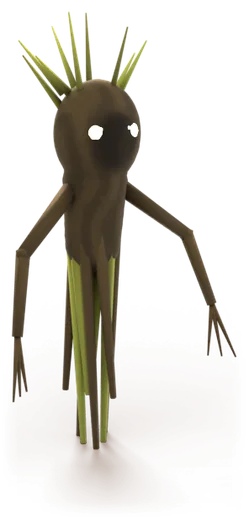
Adzov Beats haunt the thickest bush patches after dark: clusters of knotted bark and eyes that rustle when nothing else moves. They defend their bush aggressively and do not care for travellers.

Sources (2)
Dodo, as modelled in the game#015rare

Dodo

BeastNightHausaFolkloreneeds review

“Run for the water. Don't look back.”

Folklore — Dodo (Hausa) · Northern Nigeria (also told across West Africa)

In Hausa folktales the dodo is a huge, shaggy man-eating monster of the deep bush and swamps — big enough to stoop through doorways, with a keen nose for meat, sometimes taking the form of great beasts. Some accounts say it cannot cross running water. It has nothing to do with the extinct bird of the same name.

Handling note: Single compiled secondary source; verify against Tremearne's Hausa collections before launch.

042beats interpretation

After midnight, something huge moves through Enugu's darkest bush. The Dodo hunts by smell and gives chase — but every child in Coal Camp knows the trick: run for the stream. No Dodo will follow you across running water.

Sources (1)
Coalwisp, as modelled in the game#020common

Coalwisp

CoalFlame042beats original042beats original

“The seams are quiet now. The stories are not.”

042beats interpretation

Embers that never quite go out. Coalwisps drift near the old collieries, railway sidings and Coal Camp after dark, warming themselves on the stories of the miners who built the city.

Sources (1)
Awọ, as modelled in the game#021common

Awọ

RiverRhythm042beats original (Igbo name)042beats originalneeds review

“When the gutters sing, the rains are here.”

042beats interpretation

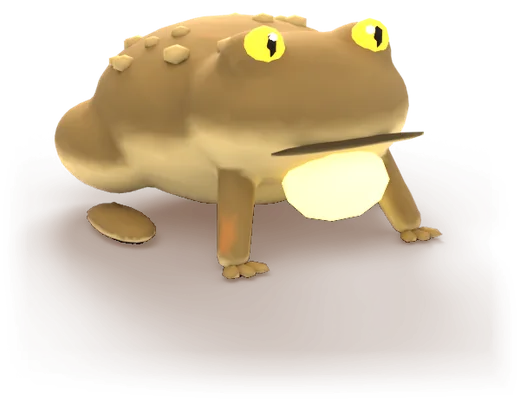
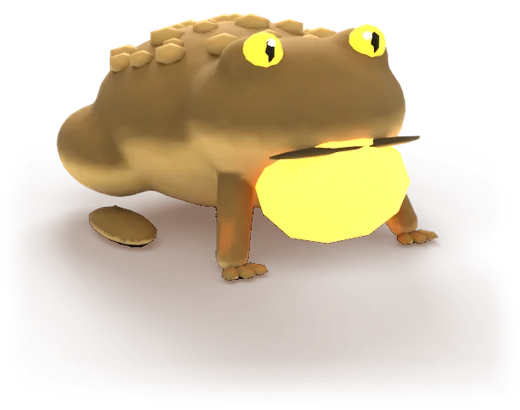
042beats imagines Awọ as a Beat that keeps the rhythm of the rains: each one croaks a slightly different beat, and a whole gutter of them can lull a careless keeper to sleep. The name is the Igbo word for toad; the creature is our invention.

Sources (1)
Kada, as modelled in the game#023rare

Kada

RiverBeast042beats original (Hausa name)042beats originalneeds review

“The pool is calm. That is the warning.”

042beats interpretation

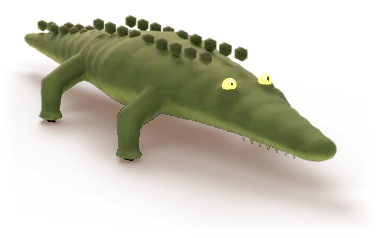
042beats' Kada is a dark, patient river Beat that followed the trade routes south and settled in the deep pools of the Ekulu. It can wait under the water for a whole afternoon.

Sources (1)
Azụ, as modelled in the game#024common

Azụ

RiverEarth042beats original (Igbo name)042beats originalneeds review

“If you hear splashing in the gutter at night, it's probably an Azụ.”

042beats interpretation

042beats' Azụ is a whiskered catfish Beat of the Ekulu and the city's storm drains. It feels everything through its whiskers and slips out of any grip.

Sources (2)
Ìkùkù, as modelled in the game#025common

Ìkùkù

StormTrickster042beats original (Igbo name)042beats originalneeds review

“Your wrapper is on the next compound's line again. Ìkùkù.”

042beats interpretation

042beats imagines Ìkùkù as a little whirl of wind that lives on Enugu's hills and plays with dust, kites and laundry. You never see one, only what it's carrying.

Sources (1)
Àmụ̀mà, as modelled in the game#026rare

Àmụ̀mà

StormFlame042beats original (Igbo name)042beats originalneeds review

“Count the seconds. It's already gone.”

042beats interpretation

042beats' Àmụ̀mà is a crackling spark-Beat born in the first storms of the rainy season. It's only seen during rain, and it never stays long in one place.

Sources (1)
Ụgụrụ, as modelled in the game#027uncommon

Ụgụrụ

StormEarth042beats original (Igbo name)042beats originalneeds review

“If your lips are cracking, Ụgụrụ is in town.”

042beats interpretation

042beats imagines Ụgụrụ as a dust devil that rides the harmattan into Enugu each December. It turns the sky white, cracks lips, and makes everything look farther away than it is.

Sources (2)
Egbe, as modelled in the game#028uncommon

Egbe

StormTricksterIgboFolktale characterneeds review

“Let it perch.”

Folklore — egbe (Igbo) · South-East Nigeria

Egbe is the Igbo word for the kite, the bird of prey that circles over markets. It appears with the eagle (ugo) in a well-known Igbo proverb: 'Egbe bere, ugo bere; nke sị ibe ya ebela, nku kwaa ya' — let the kite perch and let the eagle perch; whoever says the other should not perch, may its wing break. The proverb is usually read as 'live and let live'.

042beats interpretation

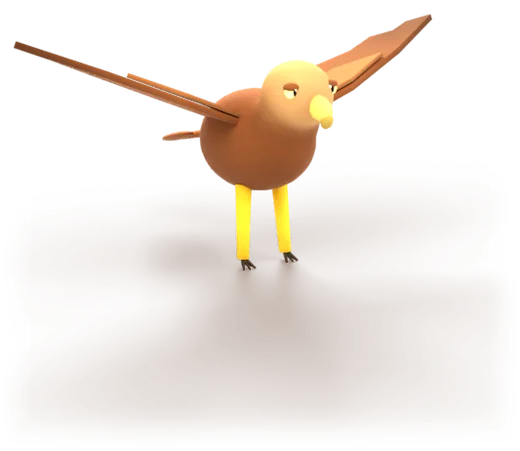
042beats' Egbe is a market-wise kite Beat that circles above Ogbete and New Market waiting for its chance. Strike one to drive it off its perch, and the proverb tends to come true.

Sources (2)
Ugo, as modelled in the game#029rare

Ugo

StormSpiritIgboFolktale characterneeds review

“Honour doesn't need to shout.”

Folklore — ùgò (Igbo) · South-East Nigeria

Ùgò is the Igbo word for the eagle; it also means honour, and eagle feathers are worn as a mark of distinction. The eagle shares the proverb 'Egbe bere, ugo bere' with the kite.

Handling note: Eagle feathers carry real meaning in Igbo title culture. 042beats shows Ugo as a proud wild bird; it never shows feathers taken for status.

042beats interpretation

042beats' Ugo is a rare eagle Beat that nests on the Udi escarpment and soars over the whole city. It lets the kites have the markets; it has the sky.

Sources (2)
Ogene, as modelled in the game#030uncommon

Ogene

IronRhythm042beats original (inspired by the Igbo ogene)042beats originalneeds review

“Everybody dances to the bell.”

042beats interpretation

042beats imagines Ogene as a Beat that grew from the rhythm of an old bell left in a compound for generations. It walks on its handle, rings when it moves, and keeps the time other Beats follow. It is a creature inspired by the instrument, not the instrument itself.

Sources (2)
Ụzụ, as modelled in the game#031uncommon

Ụzụ

IronFlame042beats original (Igbo name)042beats originalneeds review

“Hot iron, cool head.”

042beats interpretation

042beats' Ụzụ is a beetle-like Beat with a body of hot iron that lives near workshops and forges. Where there's a hammer ringing, one is usually curled up nearby in the warmth.

Sources (2)
Railspark, as modelled in the game#032uncommon

Railspark

IronCoal042beats original042beats original

“It still thinks it's 1916.”

042beats interpretation

042beats invented Railspark: a beetle-shaped Beat with wheels for feet, said to be born from the sparks of the old coal trains. They gather in the yards and run the rails at night for the joy of it.

Sources (1)
Ngwere, as modelled in the game#033common

Ngwere

EarthBeast042beats original (Igbo name)042beats originalneeds review

“Every wall in Enugu has one. Every wall.”

042beats interpretation

042beats' Ngwere is the agama of Enugu's fences and roadsides: loud, territorial, and always doing push-ups. It's the first Beat many children ever try to catch.

Sources (1)
Ụsụ, as modelled in the game#035common

Ụsụ

NightBeast042beats original (Igbo name)042beats originalneeds review

“Count them leaving at sunset. You'll lose count.”

042beats interpretation

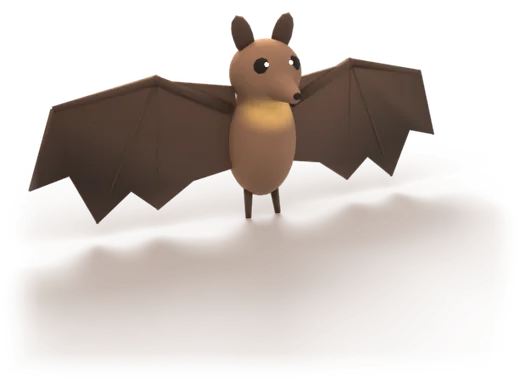
042beats' Ụsụ is a dusk Beat that roosts in the mango trees of GRA and streams out over the city at sunset. It finds its way by screeching, and it will steal your udara.

Sources (1)
Kura, as modelled in the game#036uncommon

Kura

BeastNightHausaFolktale characterneeds review

“Close your stall properly. Kura is coming.”

Folklore — kūrā (Hausa) · Northern Nigeria

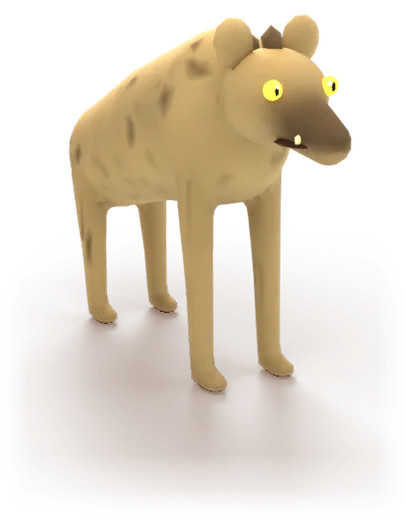
Kūrā is Hausa for the hyena. In Hausa folktales the hyena is a greedy, dangerous character; in one tale collected by R. S. Rattray, a hyena mimics a brother's call to trick and swallow a girl, and is torn apart by the lion for refusing to give her back.

042beats interpretation

042beats' Kura is a scavenger Beat that slinks into Enugu's markets after closing time. It's greedy, it laughs at the wrong moments, and it can survive on almost nothing — which makes it harder to put down than it looks.

Sources (2)
Agụ, as modelled in the game#037rare

Agụ

BeastNight042beats original (Igbo name)042beats originalneeds review

“You didn't see it. It saw you.”

042beats interpretation

042beats' Agụ is a rare leopard Beat said to keep to the last forest patches on the escarpment. Most people who claim to have seen one saw a shadow — which is how Agụ likes it.

Sources (1)
Giwa, as modelled in the game#038rare

Giwa

EarthBeastHausaFolktale characterneeds review

“It never forgets who borrowed the grain.”

Folklore — giwa (Hausa) · Northern Nigeria

Giwa is Hausa for the elephant. In a Hausa famine tale, Gizo the spider tricks the elephant — described as master of all the lands — and the hippopotamus, master of the water, into feeding his family.

042beats interpretation

042beats' Giwa is a slow, enormous Beat that remembers every grain of the famine Gizo cheated it out of. It is gentle until you resemble a spider.

Sources (2)
Akụ, as modelled in the game#039common

Akụ

ForestEarth042beats original (Igbo name)042beats originalneeds review

“After the first rain, look at the streetlights.”

042beats interpretation

042beats' Akụ is a swarm Beat: a cloud of winged termites that lifts off together after the first rains and acts as one creature. Catch one Akụ and you've caught hundreds.

Sources (1)